How a Fortnite Bronze to Unreal speedrun works in Fortnite Reload
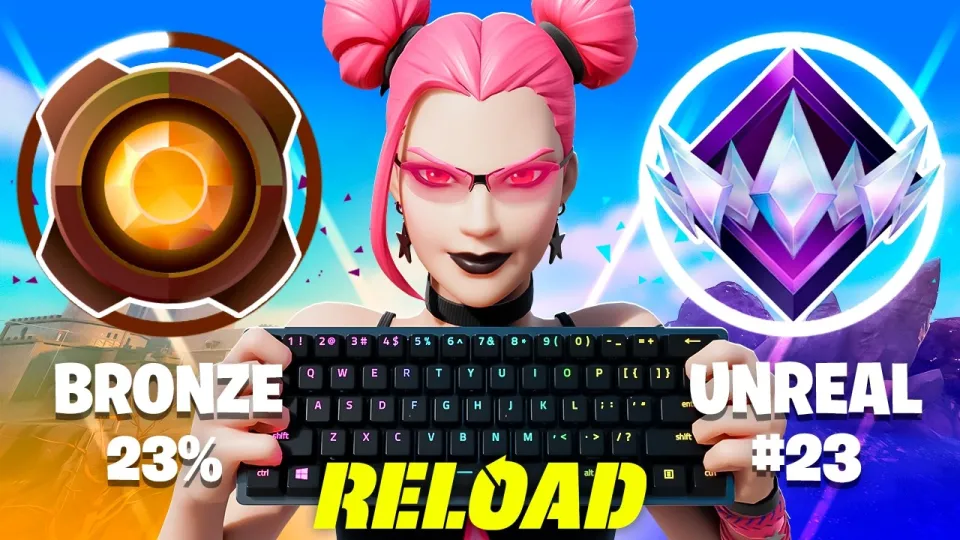
Video: BRONZE To UNREAL Ranked Speedrun In Fortnite Reload!
Want articles like this for your own video to promote it on YouTube and Google? Order them through the Telegram bot @sat_sit_bot. Articles with your video embedded are written and posted by the bot itself — on popular topical sites (no ads). Your first 50 articles are free.
· based on the channel HaloBT
A Fortnite Bronze to Unreal speedrun in Fortnite Reload is a ranked climb where a player starts at the bottom tier and tries to reach Unreal in as few matches as possible, using Reload's faster match flow and respawn system to rack up placement and elimination points quickly. HaloBT's run shows the full route from Bronze to Unreal in the Reload playlist, and the channel also points viewers to its Fortnite creator page at MoreHaloBT's Fortnite maps and updates for practice tools and map codes.
What Fortnite Reload changes about a ranked speedrun
Fortnite Reload is a squad-based mode with respawns, which means a ranked climb plays differently from standard Battle Royale. In Reload, eliminated players can rejoin the fight while their team still has lives, so matches tend to feature more early and mid-game action. That constant fighting is what makes Reload attractive for a speedrun: more eliminations per match can translate into more rank progress per hour, provided the player survives long enough to bank placement points. The trade-off is that respawns also give opponents second chances, so a speedrunner has to balance aggression with the risk of dropping a match early and losing momentum.
The ranked ladder from Bronze to Unreal
The Fortnite ranked ladder is divided into tiers, each with three sub-ranks. From the bottom, the order is Bronze, Silver, Gold, Platinum, Diamond, Elite, Champion and finally Unreal. A speedrun has to clear every sub-rank in sequence, which means the early tiers (Bronze through Gold) usually go quickly for an experienced player, while Diamond and above demand consistent placement and kills against tougher lobbies. In Reload, the same ladder applies, but the match pacing can make the middle tiers feel less grindy than in standard ranked. The final push to Unreal is typically the longest stretch because the point requirements rise and the competition tightens.
How points and placements drive the climb
Ranked progress in Fortnite comes from two sources: placement and eliminations. A high placement guarantees a baseline of points, while each elimination adds to the total. In a speedrun, the goal is to maximize points per match, which often means taking fights early to secure kills and then holding a strong position for the endgame. Reload's respawn mechanic can inflate elimination counts because downed players may return, but it also means a speedrunner cannot relax after one good fight. The most efficient matches combine a top placement with several kills, and avoiding early elimination is just as important as hunting for frags.
Controller vs keyboard and mouse in a speedrun
HaloBT is known for playing on controller, and a Bronze to Unreal speedrun on a pad highlights how controller players approach ranked. Controller aim assist helps in close-range fights, which are common in Reload's chaotic skirmishes, but building and editing speed still matters for rotating and defending. Keyboard and mouse players often have an edge in precise edits and long-range tracking, while controller players can thrive in box fights and shotgun duels. The speedrun itself is less about input device and more about decision-making: knowing when to push, when to reset, and when to play for placement.
Common questions from players trying their own climb
Players attempting their own Bronze to Unreal run often ask about the biggest obstacles. One recurring theme is the Gold rank, which some viewers describe as unexpectedly tough because it sits between the easy early tiers and the more skill-intensive Platinum and Diamond lobbies. Another common question is how to keep improving after a fast start: switching to keyboard and mouse can produce rapid gains at first, but progress often slows once basic mechanics are mastered, and the next step is usually focused practice on specific weaknesses like aim, edits or game sense. HaloBT's mechanics training map, promoted in the video description with code 6317-4546-8691, is designed for that kind of deliberate practice. Players also ask whether solo queue is viable for a speedrun; it is, but it requires adapting to random teammates and sometimes playing more selfishly to secure points.
Practical tips for a faster ranked climb
A faster climb starts with a consistent drop strategy and a small set of reliable fight patterns. Pick a landing spot you know well, loot quickly, and look for early fights only when you have a clear advantage. In Reload, staying with your squad matters because respawns reward team play, but in a solo queue speedrun you should still communicate pings and rotations. Practice build and edit drills between matches, review your deaths to spot repeated mistakes, and avoid tilting after a bad game. Finally, track your points per session: if a strategy is not producing steady gains, change the drop or the aggression level rather than grinding the same approach.
Useful links
- HaloBT's Fortnite creator page with maps and updates: https://www.fortnite.com/@MoreHaloBT
- Community Discord: https://discord.com/invite/halobt
- Twitch streams: https://www.twitch.tv/halobt
- Twitter: https://twitter.com/halobombtrooper
- Instagram: https://www.instagram.com/therealhalobt
Final thoughts on the Bronze to Unreal climb
HaloBT's Bronze to Unreal speedrun in Fortnite Reload is a useful case study for anyone trying to climb the ranked ladder efficiently. The run shows that Reload's respawn-heavy matches can speed up point accumulation, but the core skills remain the same: smart rotations, disciplined fights and consistent practice. Viewers who want to follow the same path can start with the creator's practice maps and then apply those mechanics in ranked. For more ranked breakdowns and training content, check out HaloBT's channel and his Fortnite creator page at https://www.fortnite.com/@MoreHaloBT to grab the latest map codes.
Key takeaways
- Fortnite Reload is a faster-paced mode where a Bronze to Unreal climb can be completed in far fewer matches than standard Battle Royale.
- The ranked ladder runs from Bronze through Unreal, with each tier split into III, II and I sub-ranks before the next promotion.
- Placement points and elimination bonuses both matter; in Reload, early fights are common because respawns keep squads in the game.
- HaloBT's run is a solo queue speedrun, meaning no pre-made squad to carry or coordinate with.
- A mechanics training map by HaloBT (code 6317-4546-8691) is promoted alongside the video for aim and edit practice.
Source: BRONZE To UNREAL Ranked Speedrun In Fortnite Reload! · Markdown version
Questions & answers
How long does a Fortnite Bronze to Unreal speedrun take?
The duration depends on the player's skill and the mode. In Fortnite Reload, faster matches and respawns can shorten the climb compared to standard Battle Royale, but reaching Unreal still requires clearing every tier from Bronze through Champion. A strong player might do it in a few dozen matches, while most players need significantly more.
Is it easier to reach Unreal in Fortnite Reload than in normal ranked?
Reload's respawn system creates more elimination opportunities, which can speed up point gains, but it also means opponents get second chances. Many players find the early tiers faster in Reload, while the final push to Unreal remains challenging because the point requirements and competition level are high.
Why do some players say Gold rank is the hardest part of the climb?
Gold sits between the forgiving early tiers and the more competitive Platinum and Diamond lobbies. Players who breeze through Bronze and Silver often hit a wall in Gold because opponents start using more consistent mechanics and smarter rotations, making it a common sticking point in a speedrun.
Can I use HaloBT's training map to improve my ranked speedrun?
Yes. HaloBT promotes a mechanics training map with the code 6317-4546-8691, designed for aim and edit practice. Regular drills on such maps can help players build the consistency needed for a faster climb, especially when combined with reviewing ranked matches for repeated mistakes.